When Sir Alex Ferguson retired in 2013, Manchester United entered one of the most difficult transitions in their history. Below you will see information about is news which has been summarized The Football Insight.
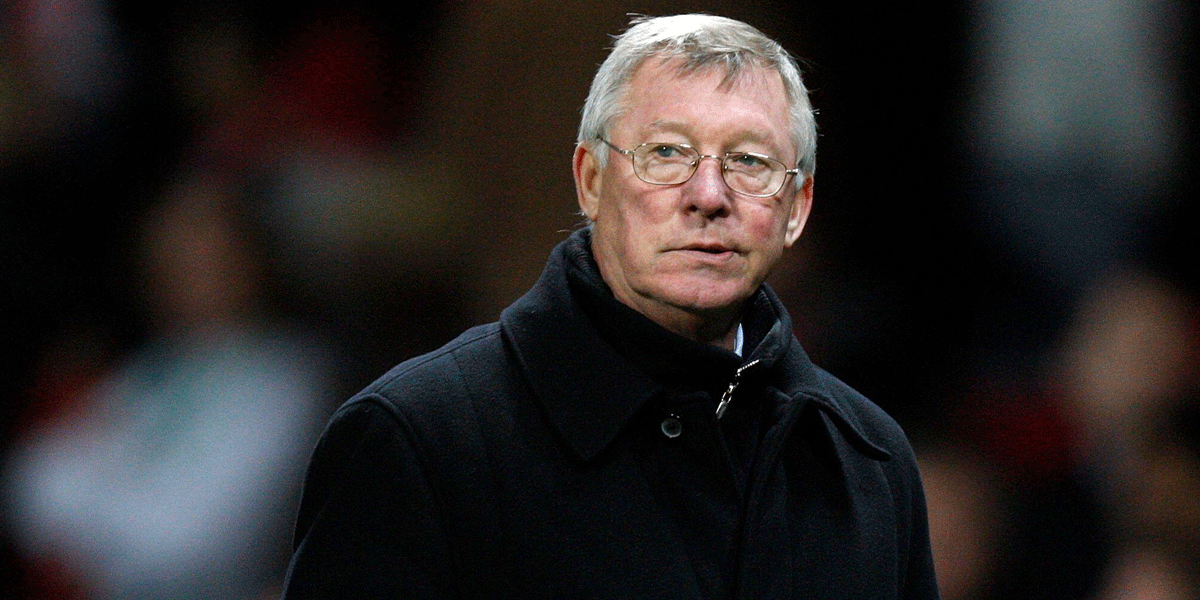
The club that once defined dominance in English football suddenly lost its identity. Despite spending huge sums on players and changing managers frequently, United failed to return to the standards set during the Ferguson era.
Managers such as David Moyes, Louis van Gaal, José Mourinho, and Ole Gunnar Solskjær all tried to rebuild the team in their own way. Each brought a different philosophy, which only added to the confusion. Short-term success came and went, but consistency and a clear playing style never truly followed.
This long period of instability has led many former players and pundits to ask the same question did United choose the wrong man at the very start? For former Premier League midfielder Sandro, the answer is clear.
Sandro’s Strong Case for Harry Redknapp
Sandro believes Manchester United missed a huge opportunity by not appointing Harry Redknapp immediately after Ferguson’s retirement. In his view, Redknapp had the personality, authority, and experience to handle a dressing room full of star players during such a sensitive transition.
According to Sandro, Redknapp’s biggest strength was his man-management. Players listened when he spoke, respected his decisions, and trusted his honesty. He was not afraid to make bold calls, even if that meant changing players at half-time or making unpopular decisions for the good of the team.
That fearless leadership, Sandro argues, is exactly what United lacked in the early post-Ferguson years. Redknapp’s confidence and clarity could have brought stability at a time when the club desperately needed it.
Read Also: European Giants Circle Michael Olise as Transfer Interest Intensifies
A Style That Matched United’s DNA
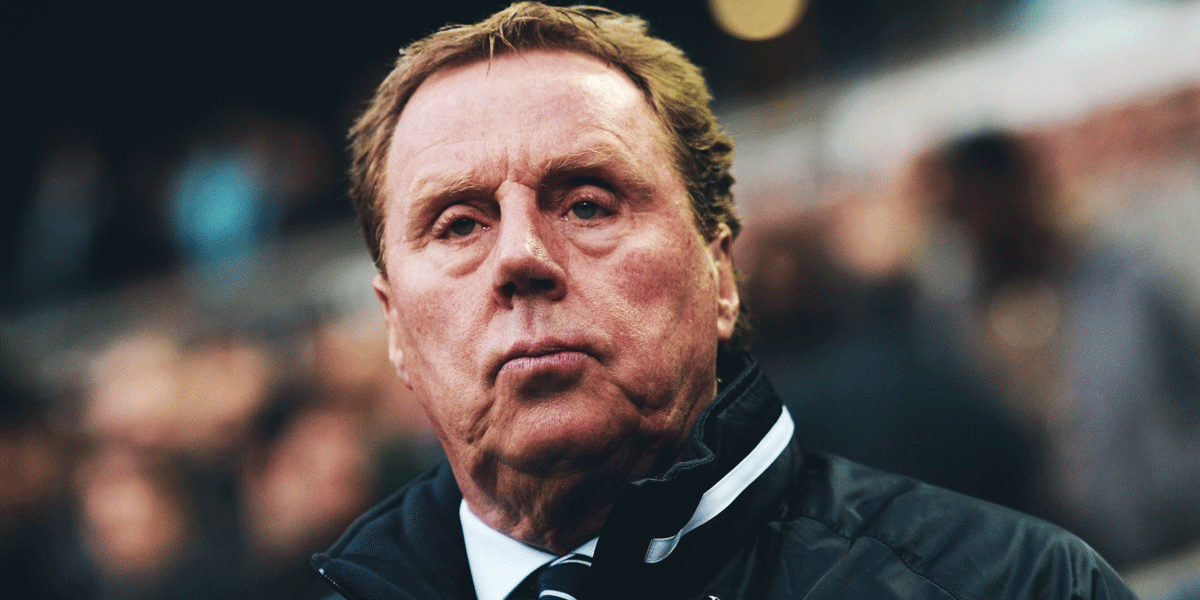
Beyond leadership, Sandro believes Redknapp’s footballing philosophy suited Manchester United perfectly. His teams played attacking football but always with balance. At Tottenham, Redknapp encouraged freedom in attack while maintaining defensive structure, something United fans traditionally value.
Sandro highlighted how Redknapp allowed players to express themselves on the pitch instead of being trapped by rigid systems. That freedom often brought the best out of creative players and built strong team unity rather than separating attack and defense into different units.
This approach, Sandro feels, aligned closely with United’s historic identity. Entertaining football, tactical flexibility, and trust in players were hallmarks of the club’s greatest eras qualities Redknapp naturally embodied.
Lessons United Are Still Learning Today
Sandro’s comments go beyond nostalgia and speak to a larger issue in modern football management. He believes the game has become too rigid, with players overloaded by systems and restrictions. Managers like Redknapp, who trusted instinct and player expression, are becoming rare.
At Manchester United, the effects of early post-Ferguson decisions are still being felt. Frequent managerial changes and shifting philosophies delayed the rebuilding process and damaged long-term planning. Sandro suggests that choosing the right personality at the right moment can be just as important as tactical brilliance.
While the debate is hypothetical, it offers a powerful reminder. Sometimes success is not about reinventing football, but about understanding people, trusting players, and leading with confidence. For Sandro, Harry Redknapp represented all of that and United may still be paying the price for letting that opportunity pass. Follow footballcoasters.co.uk for weekly deep dives into football’s biggest stories.